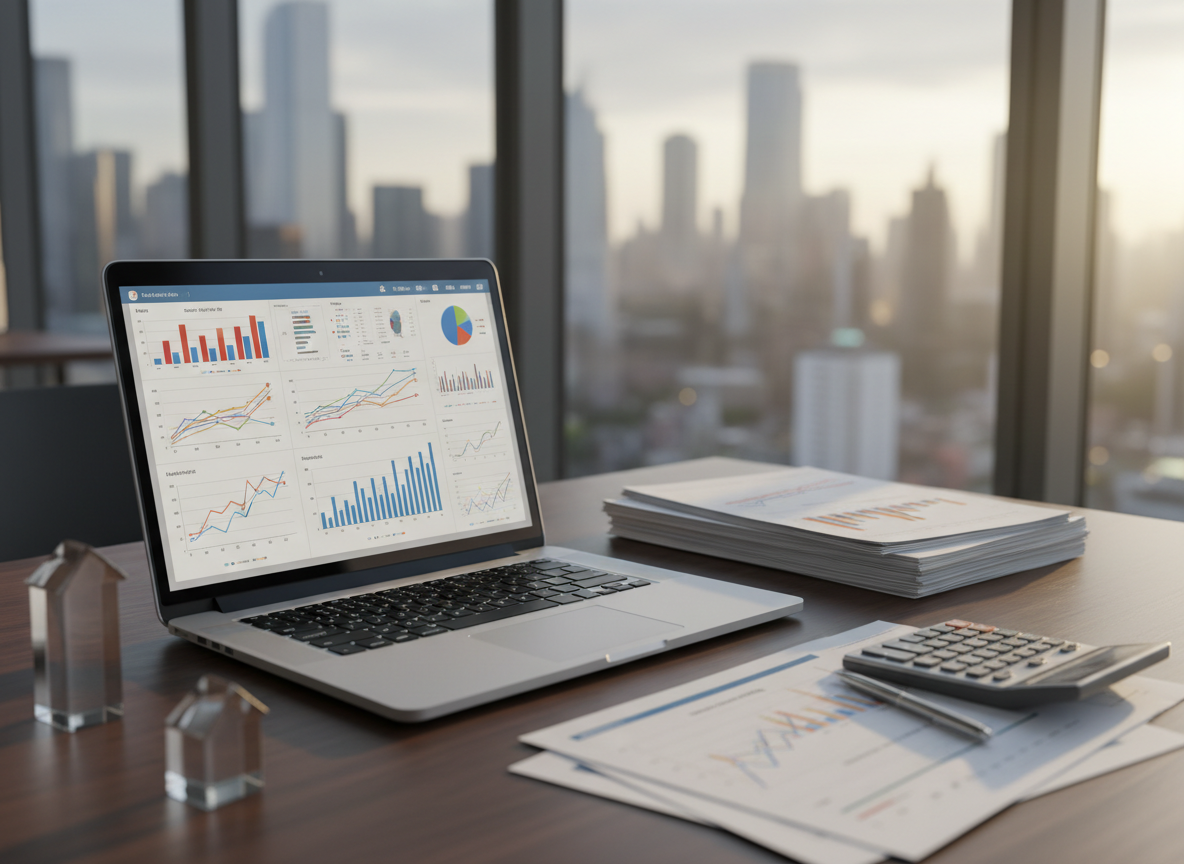
A sleek brushed-aluminum laptop open on a dark walnut desk, its screen filled with colorful charts, supply-demand curves, and macroeconomic dashboards. Around it lie neatly stacked printed reports with crisp line graphs, a silver calculator, and a minimalist glass paperweight shaped like a rising arrow. The setting is a high-rise office interior with floor-to-ceiling windows revealing a softly blurred city skyline. Late afternoon natural light pours in, creating clean reflections on the laptop surface and subtle shadows on the desk. Photographic realism, shot at eye level with a shallow depth of field that keeps the laptop and papers in sharp focus while the city recedes into soft bokeh. The mood is analytical yet optimistic, conveying modern applied economics in action.

Origin and Mission

This page delves deeper into Calcer News’ founding principles, the practical focus on applied economics, and the team’s commitment to clear, accessible analysis.

About

Origin and Mission

Calcer News started as a small desk project to translate complex economics into actionable insights for managers navigating today’s uncertain markets.
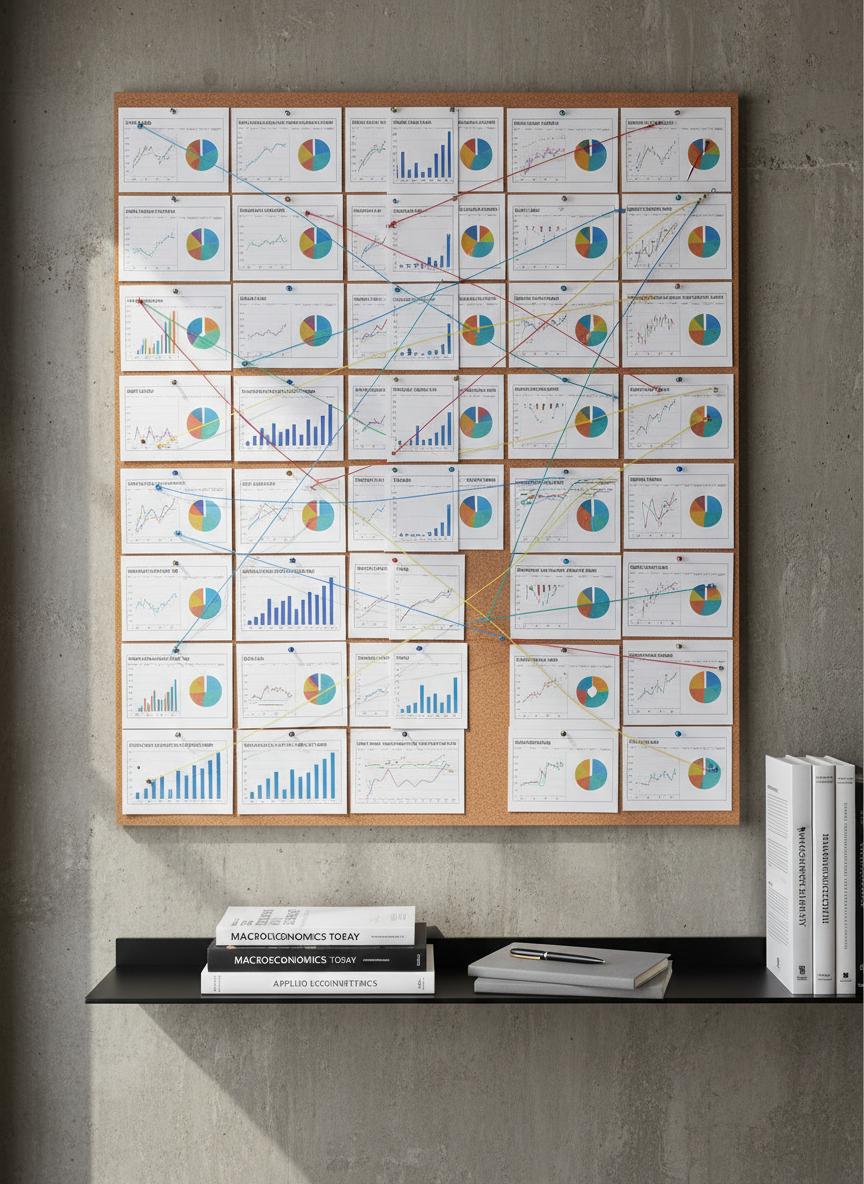
A meticulously arranged corkboard covered in pinned index cards, each displaying neatly printed economic metrics, small pie charts, and bar graphs on matte white paper. Color-coded thread connects related cards, weaving a visible network of concepts like inflation, wages, housing, and productivity. The board is mounted on a concrete wall in a minimalist workspace, with a matte-black metal shelf below holding a few economics textbooks and a graphite-grey notebook. Soft overcast window light from the left creates gentle, even illumination with mild shadows under the cards, emphasizing depth and texture. Photographic realism with a slightly elevated, straight-on composition and moderate depth of field, making the central cluster of cards crisp while edges blur slightly. The atmosphere is thoughtful, systematic, and investigative, evoking the practical puzzle-solving side of applied economics.

Meet Our Economists

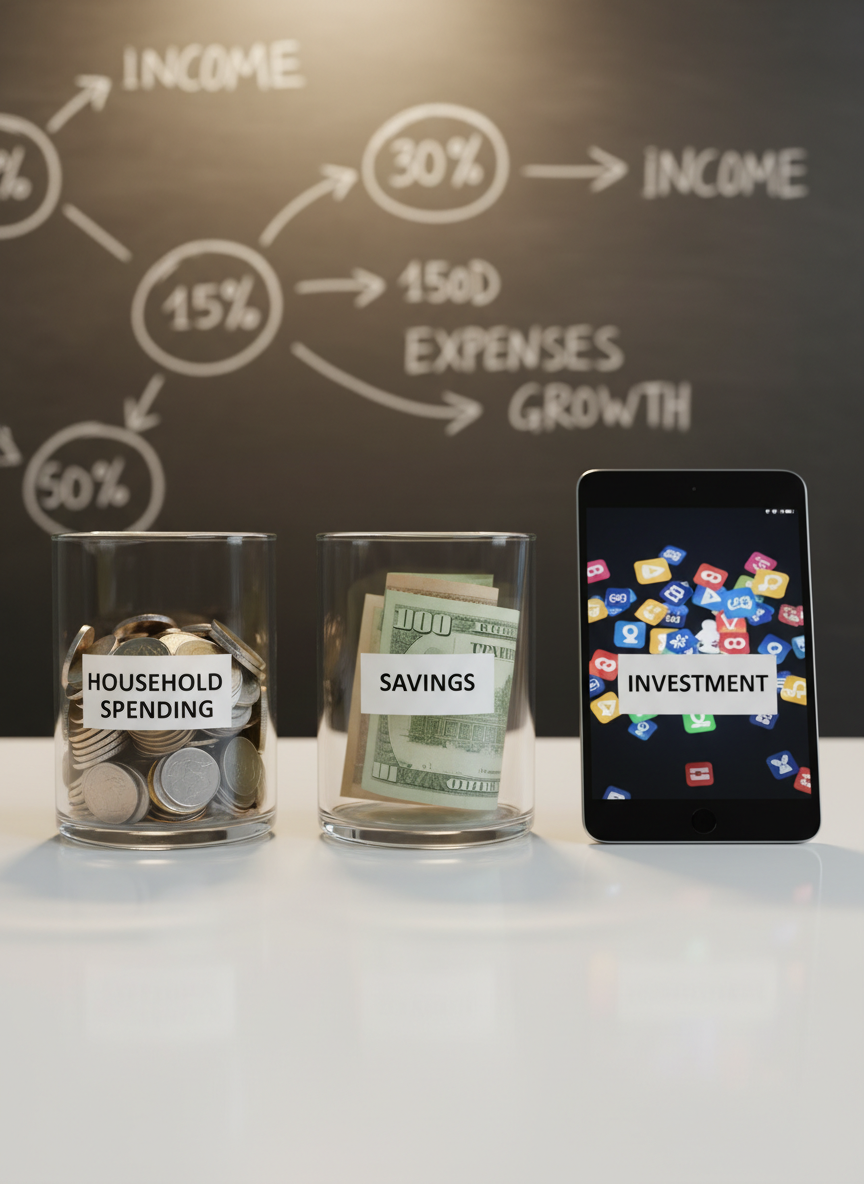
A close-up of a clean white tabletop where three transparent glass containers hold different forms of money: polished coins, crisp folded banknotes, and a small pile of digital icons displayed on a slim black tablet screen. Each container has a minimalist label like “Household Spending,” “Savings,” and “Investment” printed in precise sans-serif type. Behind them, a blurred chalkboard features sketched arrows, percentages, and simple diagrams showing money flows through an economy. Warm studio lighting from above and slightly behind the containers creates gentle highlights on the glass edges and soft shadows on the table. Photographic realism, with a low, eye-level angle and shallow depth of field that emphasizes the containers in sharp focus. The mood is clear, educational, and accessible, illustrating core applied economics concepts for everyday life.

Aarav Sharma

A sleek brushed-aluminum laptop open on a dark walnut desk, its screen filled with colorful charts, supply-demand curves, and macroeconomic dashboards. Around it lie neatly stacked printed reports with crisp line graphs, a silver calculator, and a minimalist glass paperweight shaped like a rising arrow. The setting is a high-rise office interior with floor-to-ceiling windows revealing a softly blurred city skyline. Late afternoon natural light pours in, creating clean reflections on the laptop surface and subtle shadows on the desk. Photographic realism, shot at eye level with a shallow depth of field that keeps the laptop and papers in sharp focus while the city recedes into soft bokeh. The mood is analytical yet optimistic, conveying modern applied economics in action.

Mateo García

A meticulously arranged corkboard covered in pinned index cards, each displaying neatly printed economic metrics, small pie charts, and bar graphs on matte white paper. Color-coded thread connects related cards, weaving a visible network of concepts like inflation, wages, housing, and productivity. The board is mounted on a concrete wall in a minimalist workspace, with a matte-black metal shelf below holding a few economics textbooks and a graphite-grey notebook. Soft overcast window light from the left creates gentle, even illumination with mild shadows under the cards, emphasizing depth and texture. Photographic realism with a slightly elevated, straight-on composition and moderate depth of field, making the central cluster of cards crisp while edges blur slightly. The atmosphere is thoughtful, systematic, and investigative, evoking the practical puzzle-solving side of applied economics.

Zuri Ndlovu

A close-up of a clean white tabletop where three transparent glass containers hold different forms of money: polished coins, crisp folded banknotes, and a small pile of digital icons displayed on a slim black tablet screen. Each container has a minimalist label like “Household Spending,” “Savings,” and “Investment” printed in precise sans-serif type. Behind them, a blurred chalkboard features sketched arrows, percentages, and simple diagrams showing money flows through an economy. Warm studio lighting from above and slightly behind the containers creates gentle highlights on the glass edges and soft shadows on the table. Photographic realism, with a low, eye-level angle and shallow depth of field that emphasizes the containers in sharp focus. The mood is clear, educational, and accessible, illustrating core applied economics concepts for everyday life.

Leila Haddad

Reviews

A sleek brushed-aluminum laptop open on a dark walnut desk, its screen filled with colorful charts, supply-demand curves, and macroeconomic dashboards. Around it lie neatly stacked printed reports with crisp line graphs, a silver calculator, and a minimalist glass paperweight shaped like a rising arrow. The setting is a high-rise office interior with floor-to-ceiling windows revealing a softly blurred city skyline. Late afternoon natural light pours in, creating clean reflections on the laptop surface and subtle shadows on the desk. Photographic realism, shot at eye level with a shallow depth of field that keeps the laptop and papers in sharp focus while the city recedes into soft bokeh. The mood is analytical yet optimistic, conveying modern applied economics in action.

Aya Nakamura

Calcer News has become our go-to source for grounded, data-driven insights that translate into smarter strategy and decisive leadership decisions.

A meticulously arranged corkboard covered in pinned index cards, each displaying neatly printed economic metrics, small pie charts, and bar graphs on matte white paper. Color-coded thread connects related cards, weaving a visible network of concepts like inflation, wages, housing, and productivity. The board is mounted on a concrete wall in a minimalist workspace, with a matte-black metal shelf below holding a few economics textbooks and a graphite-grey notebook. Soft overcast window light from the left creates gentle, even illumination with mild shadows under the cards, emphasizing depth and texture. Photographic realism with a slightly elevated, straight-on composition and moderate depth of field, making the central cluster of cards crisp while edges blur slightly. The atmosphere is thoughtful, systematic, and investigative, evoking the practical puzzle-solving side of applied economics.

Mateo García

The analyses are rigorous yet practical, helping our team spot opportunities and avoid costly mistakes in a volatile economy.